
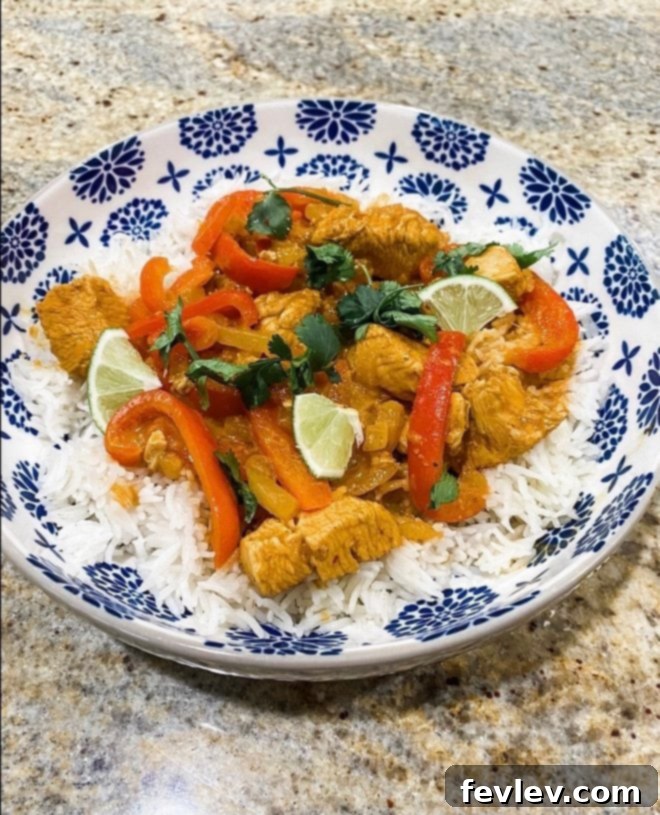

Creamy & Flavorful One-Pot Coconut Curry with Chicken
Julia Pacheco
Embark on a culinary journey with this incredibly rich, creamy, and vibrantly spiced Coconut Curry. It’s a true one-pot wonder that delivers a comforting and deeply satisfying meal, perfect for any night of the week. Whether you’re craving a quick dinner or an impressive dish for guests, this easy chicken coconut curry recipe is designed for maximum flavor with minimal effort. Its versatility means it pairs beautifully with fluffy rice, springy noodles, or fresh, warm naan bread, making it a staple in your home kitchen. Get ready to experience a burst of exotic flavors in every spoonful!
7 minutes
15 minutes
22 minutes
4
servings
Pin Recipe
Comment
Print Recipe
Ingredients
To create this sensational Coconut Curry, fresh and high-quality ingredients are key. Each component plays a vital role in building the layered flavors that make this dish so irresistible.
-
2
Tbs
olive oil -
1
white onion,
diced -
1
LB
boneless, skinless chicken breast,
cut into 1-inch cubes -
3
tsp
minced garlic (about 3 cloves) -
1
Tbs
minced ginger (fresh is best for flavor) -
2
tsp
ground coriander -
2
tsp
curry powder -
3
Tbs
red curry paste (adjust to desired spice level) -
2
Tbs
lime juice,
freshly squeezed, optional but highly recommended for brightness -
1
Red bell pepper,
sliced into thin strips -
1
can (13.5 oz / 400ml)
full-fat coconut milk -
1
Tbs
brown sugar (or to taste) -
Fresh cilantro,
chopped, for optional topping
Key Ingredient Notes:
- **Full-Fat Coconut Milk:** This is crucial for achieving that rich, creamy texture and depth of flavor. Light coconut milk will result in a thinner, less satisfying curry.
- **Red Curry Paste:** Brands vary significantly in spice level. If you’re sensitive to heat, start with 2 tablespoons and add more to taste.
- **Fresh Ginger and Garlic:** While jarred versions are convenient, fresh minced ginger and garlic elevate the aroma and taste profile of your curry significantly.
- **Chicken Breast:** You can substitute with chicken thighs for a juicier texture, or even make it vegetarian by using tofu, chickpeas, or lentils.
Instructions
Follow these simple steps to create a show-stopping Coconut Curry that’s packed with flavor and incredibly satisfying. Precision in timing and technique will ensure the best results.
-
**Step 1: Sauté Aromatics.** Heat the olive oil in a large skillet or Dutch oven over medium heat. Once shimmering, add the diced white onion and sauté for 3-5 minutes until it softens and becomes translucent, releasing its sweet aroma. Do not brown the onion, as this can affect the curry’s final color and flavor profile.
-
**Step 2: Bloom the Spices.** Add the minced garlic, minced ginger, ground coriander, curry powder, and red curry paste to the pan with the softened onions. Stir frequently for 2-3 minutes. This crucial step, known as “blooming” the spices, enhances their fragrance and deepens their flavor by toasting them lightly in the hot oil. Be careful not to burn them, as this will result in a bitter taste.
-
**Step 3: Brown the Chicken.** If the pan seems dry after blooming the spices, add an additional tablespoon of olive oil. Add the cubed chicken breast to the pan and cook for about 4 minutes, or until the chicken is about 80% cooked through and lightly browned on all sides. It doesn’t need to be fully cooked at this stage, as it will finish cooking in the curry sauce.
-
**Step 4: Introduce Liquid and Flavor.** Pour in the full-fat coconut milk, add the brown sugar, and if using, the fresh lime juice. Stir well to combine all ingredients, ensuring the curry paste and spices are fully incorporated into the coconut milk.
-
**Step 5: Simmer to Perfection.** Bring the curry to a gentle simmer over medium-low heat. Add the sliced red bell pepper. Stir frequently to prevent the bottom from scorching and continue simmering until the sauce has thickened to your desired consistency and the chicken is completely cooked through (no longer pink inside). This usually takes another 5-7 minutes. The bell pepper will soften slightly but should still retain a pleasant crunch.
-
**Step 6: Serve and Garnish.** Remove from heat. Taste and adjust seasoning if necessary (you might want a pinch of salt or a bit more sugar/lime). Serve your vibrant Coconut Curry immediately over a bed of steamed jasmine rice, brown rice, or quinoa. For an extra pop of freshness and flavor, generously top with chopped fresh cilantro.
Recipe Video
Watch the video below for a visual guide on how to prepare this delicious Coconut Curry. Seeing the steps in action can help ensure you get it just right!
Nutrition Information
Calories:
435
kcal
|
Carbohydrates:
14
g
|
Protein:
27
g
|
Fat:
32
g
|
Saturated Fat:
20
g
|
Polyunsaturated Fat:
2
g
|
Monounsaturated Fat:
7
g
|
Trans Fat:
0.01
g
|
Cholesterol:
73
mg
|
Sodium:
149
mg
|
Potassium:
790
mg
|
Fiber:
2
g
|
Sugar:
6
g
|
Vitamin A:
2752
IU
|
Vitamin C:
47
mg
|
Calcium:
67
mg
|
Iron:
5
mg
Nutrition information is automatically calculated and should only be used as an approximation. Values can vary based on specific brands and ingredient preparation.
Tips for a Perfect Coconut Curry
- **Don’t Rush the Aromatics:** Sautéing the onions, garlic, and ginger until fragrant is crucial for building a flavorful base.
- **Bloom Your Spices:** Briefly toasting the dry spices and curry paste in oil before adding liquids enhances their flavor immensely. Keep an eye on them to prevent burning.
- **Adjust Spice Levels:** Red curry paste varies in heat. If you prefer a milder curry, start with less paste and add more to taste. For extra heat, a pinch of red chili flakes or a fresh sliced chili can be added with the aromatics.
- **Sweetness and Acidity Balance:** The brown sugar balances the spice and acidity, while lime juice adds a bright, fresh finish. Adjust these to your personal preference.
- **Consistency Control:** If your curry is too thick, thin it with a little water or vegetable broth. If it’s too thin, let it simmer uncovered for a few extra minutes to reduce.
- **Ingredient Freshness:** Freshly minced ginger and garlic make a noticeable difference compared to pre-minced versions.
Variations and Substitutions
This Coconut Curry recipe is incredibly adaptable, allowing you to customize it based on your dietary preferences and what you have on hand. Here are some popular variations:
Protein Alternatives:
- **Vegetarian/Vegan:** Replace chicken with firm tofu (pressed and cubed), chickpeas, or lentils. You can also add more vegetables like spinach, kale, cauliflower, or sweet potatoes.
- **Shrimp:** Add 1 lb of peeled and deveined shrimp during the last 3-4 minutes of simmering, or until pink and cooked through.
- **Beef or Pork:** Cut into stewing cubes and brown thoroughly before adding aromatics. Simmer longer until tender.
Vegetable Additions:
- **Leafy Greens:** Stir in a few handfuls of fresh spinach or kale during the last few minutes of cooking until wilted.
- **Root Vegetables:** Add diced sweet potatoes, carrots, or regular potatoes along with the coconut milk. They will need a longer simmering time to cook through.
- **Other Vegetables:** Broccoli florets, snap peas, zucchini, or mushrooms can be added during the final simmer for added texture and nutrients.
Flavor Enhancements:
- **Lemongrass:** Add a stalk of bruised lemongrass (remove before serving) for an aromatic, citrusy note.
- **Kaffir Lime Leaves:** A couple of fresh or dried kaffir lime leaves can infuse a deep, distinctive aroma.
- **Fish Sauce:** A dash of fish sauce can add an umami depth, especially if you want a more authentic Thai flavor profile.
- **Spice Level:** For an extra kick, add a thinly sliced fresh red chili (like bird’s eye chili) along with the garlic and ginger.
Serving Suggestions
This versatile Coconut Curry is a meal in itself, but it truly shines when served with complementary sides. Here are some of our favorite ways to enjoy it:
- **Classic Pairing:** Steamed jasmine rice or brown rice is the most traditional accompaniment, soaking up all the delicious sauce.
- **Noodle Delight:** Serve over rice noodles or egg noodles for a different texture.
- **Bread for Dipping:** Warm naan bread, roti, or pita bread are perfect for scooping up every last drop of the creamy curry.
- **Healthy Options:** Quinoa or cauliflower rice offer a lighter, lower-carb alternative.
- **Fresh Garnish:** Always finish with a generous sprinkle of fresh cilantro. A squeeze of fresh lime juice just before serving can also brighten the flavors.
Why You’ll Love This Coconut Curry
This Coconut Curry is more than just a meal; it’s an experience. Its rich, aromatic flavors and creamy texture make it a comforting dish that’s surprisingly easy to prepare. Whether you’re a seasoned chef or a kitchen novice, you’ll appreciate how quickly this one-pot wonder comes together, proving that incredibly delicious food doesn’t have to be complicated. It’s perfect for a cozy weeknight dinner, impressive enough for entertaining, and versatile enough to be adapted to any palate. We hope this detailed guide helps you create a truly memorable meal that you’ll want to make again and again.
Tried this recipe?
Let us know how it was!