
Easy Sheet Pan Eggs: Your Ultimate Guide to Effortless Breakfast
Julia Pacheco
Revolutionize your breakfast routine with these incredibly easy sheet pan eggs! Perfect for feeding a crowd, making a quick family meal, or meal prepping for the week ahead, this recipe simplifies cooking eggs to perfection. Say goodbye to standing over the stove flipping individual eggs; with sheet pan eggs, you can enjoy a hands-off, delicious, and versatile breakfast solution. Whether you prefer them in sandwiches, wraps, on their own, or as part of a hearty brunch, these baked eggs offer convenience without compromising on taste. Discover how to create fluffy, flavorful eggs with minimal effort and cleanup.
5 minutes
20 minutes
25 minutes
6
servings
Save Recipe
Saved Recipe
Pin Recipe
Comment
Print Recipe
Looking for a hassle-free way to make breakfast for the whole family or streamline your weekly meal prep? Look no further than this fantastic recipe for Easy Sheet Pan Eggs! This method promises perfectly cooked eggs every time, with minimal effort and even less cleanup. Whether you’re a busy parent, a student on the go, or simply someone who loves a good breakfast without the fuss, these baked eggs are about to become your new favorite. They are incredibly versatile, serving as a delicious base for sandwiches, wraps, breakfast bowls, or simply enjoyed on their own. Let’s dive into how you can make these delightful sheet pan eggs.
Ingredients for Your Perfect Sheet Pan Eggs
Crafting these simple yet satisfying sheet pan eggs requires only a few core ingredients. However, the beauty of this recipe lies in its adaptability, allowing you to easily customize it with additional elements to suit your taste preferences or whatever you have on hand.
-
Olive oil: Essential for preventing sticking and ensuring a golden-brown finish. You can also use avocado oil or melted butter for a different flavor. -
12 Large Eggs: The star of the show! Fresh, large eggs work best for uniform cooking and size. For a richer flavor, consider free-range or organic eggs. -
Salt and Pepper , to taste: Simple seasonings that elevate the natural flavor of the eggs. Don’t be shy with the salt, but adjust according to your preference.
Optional Add-ins for Enhanced Flavor:
To truly make these sheet pan eggs your own, consider incorporating some of these delicious additions before or during the baking process:
- Vegetables: Finely diced bell peppers (any color), chopped onions, fresh spinach (wilts beautifully), sliced mushrooms, or halved cherry tomatoes. Sauté heartier vegetables like onions and peppers slightly before adding to the pan to ensure they cook through.
- Meats: Cooked and crumbled bacon, breakfast sausage, or diced ham can add a savory protein boost.
- Cheese: A sprinkle of shredded cheddar, Monterey Jack, mozzarella, or crumbled feta can add a creamy, tangy, or sharp note.
- Herbs & Spices: Fresh chopped chives, parsley, dill, or a dash of garlic powder, onion powder, or paprika can introduce aromatic depth.
- Dairy: For fluffier eggs, whisk a tablespoon or two of milk or cream into your beaten eggs before pouring them onto the pan.
The beauty of sheet pan eggs is their versatility; feel free to experiment with combinations that appeal to you and your family.
Step-by-Step Instructions for Perfect Sheet Pan Eggs
Follow these simple steps to prepare your delicious and easy sheet pan eggs. This method ensures even cooking and minimizes mess, making your breakfast preparation a breeze.
-
Step 1: Preheat and Prepare Your Pan
Preheat your oven to 425 degrees Fahrenheit (220 degrees Celsius). This high temperature helps the eggs cook quickly and evenly. While the oven heats, take a standard baking sheet (approximately 9×13 inches or larger for 12 eggs) and generously coat it with olive oil. Ensure the entire surface, including the edges, is well-oiled to prevent sticking. Place the oiled sheet pan into the preheated oven and let it heat for 10-15 minutes. This crucial step creates a non-stick surface and helps the eggs cook through properly.
-
Step 2: Add the Eggs
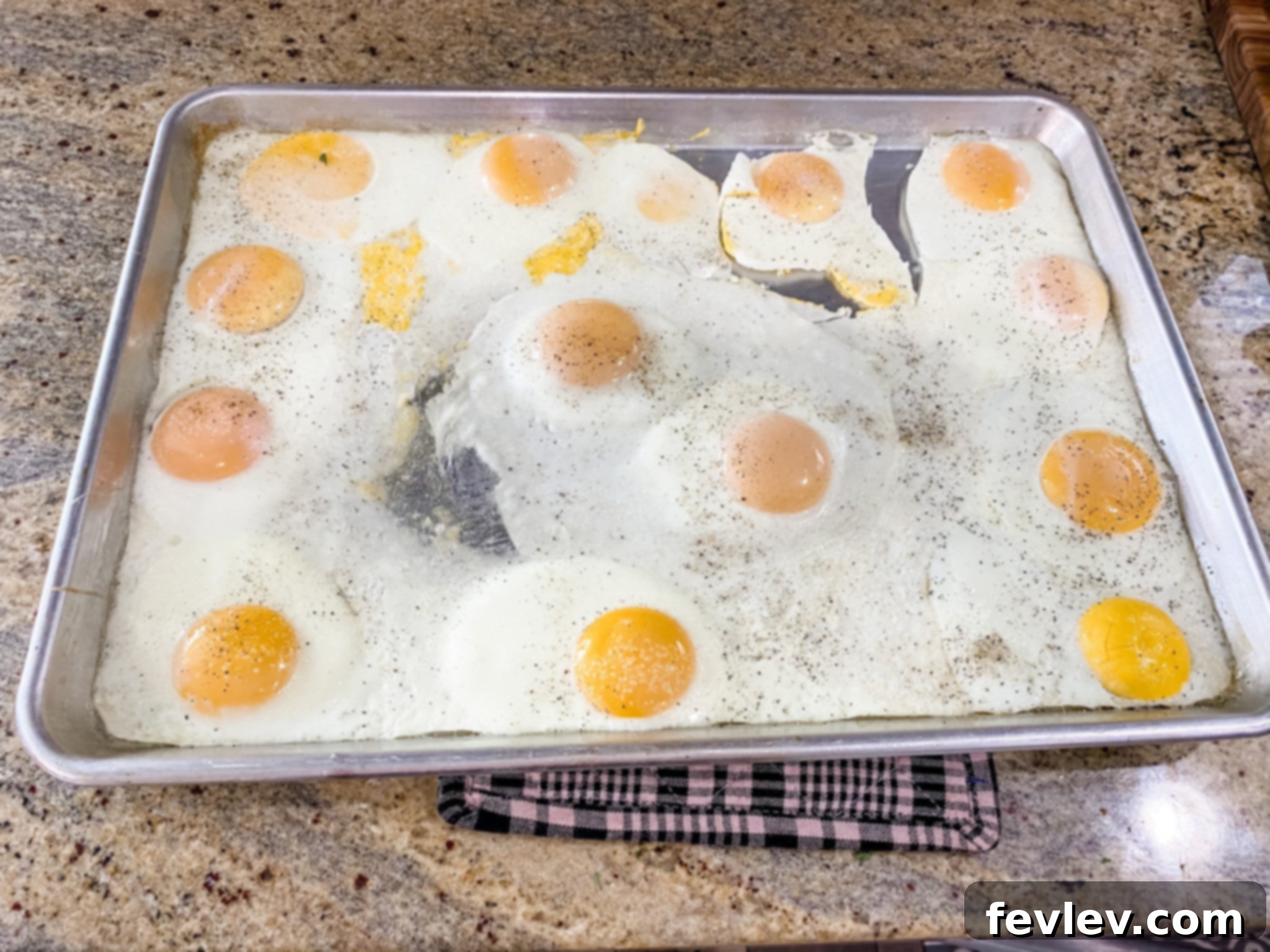
Carefully remove the hot sheet pan from the oven using oven mitts. Crack all 12 eggs directly onto the hot pan, spacing them out as much as possible to allow for individual portions. You can leave the yolks whole for a “fried egg” style or gently break and scramble them on the pan for a more cohesive egg “slab.” Season generously with salt and pepper to taste. If you’re adding any pre-cooked toppings like bacon bits, ham, or sautéed vegetables, sprinkle them over the eggs at this stage. For raw, quick-cooking vegetables like spinach or cherry tomatoes, you can add them now as well.
-
Step 3: Bake to Perfection
Return the sheet pan to the oven and bake for 5-10 minutes. The exact baking time will depend on your oven and your desired yolk consistency. For runny yolks, bake closer to 5-7 minutes. For fully set whites and firm yolks, you might need 8-10 minutes. Keep a close eye on them; the whites should be completely set and opaque. Once cooked to your liking, remove the pan from the oven. If adding cheese, sprinkle it on during the last minute of baking or immediately after removing the eggs, allowing the residual heat to melt it perfectly.
Video Tutorial
Variations and Customizations for Your Sheet Pan Eggs
One of the greatest advantages of sheet pan eggs is their incredible versatility. You can easily adapt this basic recipe to create a variety of flavor profiles, ensuring every meal feels fresh and exciting. Here are some popular variations:
- Garden Veggie Delight: Before cracking the eggs, sauté finely diced bell peppers, onions, and mushrooms until tender-crisp. Scatter them evenly on the oiled sheet pan before adding the eggs. Top with fresh spinach leaves during the last couple of minutes of baking for a vibrant, healthy start to your day.
- Southwestern Style: Incorporate diced green chiles, a sprinkle of cumin and chili powder, and cooked black beans. Once baked, top with salsa, avocado slices, and fresh cilantro for a zesty kick.
- Mediterranean Inspired: Crumble feta cheese and add chopped sun-dried tomatoes and Kalamata olives over the eggs. A sprinkle of dried oregano can further enhance the Mediterranean flavors.
- Hearty Meat Lover’s: Layer with pre-cooked crumbled sausage, crispy bacon bits, or diced ham. A blend of cheddar and Monterey Jack cheese would complement these savory additions perfectly.
- Cheesy Herb: Mix a blend of your favorite shredded cheeses (cheddar, mozzarella, Gruyere) with finely chopped fresh herbs like chives, parsley, and dill. Sprinkle generously over the eggs before baking.
Don’t be afraid to get creative! The sheet pan is your canvas for culinary experimentation.
Serving Suggestions: How to Enjoy Your Baked Eggs
Once your easy sheet pan eggs are baked to perfection, the serving possibilities are endless! Here are some ideas to inspire your next breakfast or brunch:
- Classic Breakfast Sandwich: Cut the baked eggs into squares or circles and layer them on toasted English muffins, bagels, or bread with cheese, bacon, or sausage for a quick and satisfying sandwich.
- Breakfast Burritos & Tacos: Wrap a slice of egg with warm tortillas, avocado, salsa, and your favorite fillings for a portable and delicious meal.
- On Toast or Avocado Toast: Serve a portion of the baked egg directly on a piece of rustic toast or on a creamy slice of avocado toast for a simple yet elegant meal.
- Part of a Big Breakfast Platter: Pair with crispy hash browns, fresh fruit, pancakes or waffles, and a side of protein for a hearty brunch spread.
- Egg Salad Alternative: Chop the baked eggs into smaller pieces, mix with a touch of mayonnaise, mustard, and celery for a quick and healthier egg salad.
- In Grain Bowls: Add a piece of sheet pan egg to your breakfast grain bowl alongside quinoa or farro, roasted vegetables, and a drizzle of hot sauce.
These eggs are not just for breakfast; they make a fantastic quick lunch or light dinner option too!
Meal Prep Made Easy: Storing and Reheating Sheet Pan Eggs
One of the standout benefits of this recipe is its meal prep potential. These sheet pan eggs are excellent for making ahead and enjoying throughout the week. Here’s how to store and reheat them:
- Storage: Once the eggs have cooled completely, cut them into individual portions (squares or rectangles). Store them in an airtight container in the refrigerator for up to 3-4 days.
- Reheating in the Microwave: Place a portion of egg on a microwave-safe plate. Heat on high for 30-60 seconds, or until warmed through. Be careful not to overheat, as this can make them rubbery.
- Reheating in the Oven/Toaster Oven: For a crispier edge, reheat in a preheated oven at 300°F (150°C) for about 5-7 minutes, or until warm. This method is great if you’re assembling a breakfast sandwich and want to warm the bread simultaneously.
- Freezing (Optional): For longer storage, you can freeze individual egg portions. Wrap each piece tightly in plastic wrap, then place in a freezer-safe bag or container for up to 1-2 months. Thaw overnight in the refrigerator before reheating.
Having these pre-cooked eggs on hand makes busy mornings so much smoother, ensuring you always have a healthy, homemade breakfast ready to go.
Why Choose Sheet Pan Eggs Over Traditional Methods?
While frying or scrambling eggs on the stovetop has its place, the sheet pan method offers several distinct advantages, especially when cooking for multiple people or planning meals in advance:
- Effortless & Hands-Off: No more standing over a hot stove, flipping individual eggs. Once the pan is in the oven, you’re free to attend to other tasks, making your morning routine much more relaxed.
- Batch Cooking & Meal Prep: Easily prepare a dozen or more eggs at once, perfect for feeding a large family or stocking up for the week’s breakfasts.
- Consistent Results: The even heat of the oven cooks all the eggs uniformly, ensuring consistent texture and doneness across the entire batch.
- Minimal Cleanup: With just one sheet pan to wash, cleanup is significantly reduced compared to using multiple frying pans. Lining the pan with parchment paper can make cleanup even easier.
- Versatile Customization: As demonstrated, it’s incredibly simple to add a variety of toppings and seasonings, allowing for endless flavor combinations that cater to everyone’s preferences.
Embracing sheet pan eggs means embracing a smarter, more efficient way to enjoy this breakfast staple.
Expert Tips for the Best Sheet Pan Eggs
Achieving perfectly baked eggs is simple with these additional tips:
- Don’t Skimp on the Oil: A well-oiled, preheated pan is key to preventing sticking. It creates a barrier that allows the eggs to release easily.
- Even Egg Distribution: Try to crack eggs with some space in between them. If you prefer scrambled sheet pan eggs, whisk them thoroughly with a splash of milk or cream before pouring evenly over the hot pan.
- Monitor Your Oven: Every oven is different. The first time you make these, keep a close eye on the eggs, especially around the 5-minute mark, to gauge how quickly they cook in your specific oven.
- Add Toppings Strategically: If adding cheese, sprinkle it during the last minute of baking or right after removing the pan from the oven to ensure it melts without burning.
- Parchment Paper Pro-Tip: For even easier cleanup, line your sheet pan with parchment paper before oiling.
Frequently Asked Questions (FAQs) About Sheet Pan Eggs
- Can I use a different type of oil?
- Yes, olive oil is recommended for its flavor and heat stability, but you can also use avocado oil, canola oil, or even melted butter for a richer taste. Ensure it’s a high-smoke-point oil suitable for oven baking.
- How do I prevent the eggs from sticking to the pan?
- The most important step is to generously coat your sheet pan with oil and preheat the oiled pan in the oven before adding the eggs. This creates a hot, non-stick surface. Using parchment paper underneath the oil is an additional foolproof method.
- What if I want runny yolks?
- For runny yolks, bake your sheet pan eggs for a shorter duration, typically around 5-7 minutes. Start checking them at 5 minutes and remove them from the oven as soon as the whites are set but the yolks are still soft. Remember that residual heat will continue to cook them slightly after removal.
- Can I add vegetables or meat to the sheet pan eggs?
- Absolutely! This is where sheet pan eggs truly shine. For heartier vegetables like bell peppers or onions, it’s best to sauté them slightly beforehand to ensure they cook through. Cooked meats like bacon or sausage crumbles can be added directly with the eggs. Sprinkle cheese during the last minute of baking for a perfect melt.
- Are sheet pan eggs healthy?
- Yes, eggs are a fantastic source of protein and essential nutrients. This cooking method uses minimal added fat, making it a very healthy breakfast option. You can further enhance their nutritional value by adding plenty of vegetables.
Nutrition Information (per serving)
Calories:
126
kcal
|
Carbohydrates:
1
g
|
Protein:
11
g
|
Fat:
8
g
|
Saturated Fat:
3
g
|
Polyunsaturated Fat:
2
g
|
Monounsaturated Fat:
3
g
|
Trans Fat:
0.03
g
|
Cholesterol:
327
mg
|
Sodium:
125
mg
|
Potassium:
121
mg
|
Sugar:
0.3
g
|
Vitamin A:
475
IU
|
Calcium:
49
mg
|
Iron:
2
mg
Nutrition information is automatically calculated and should be used as an approximation. Individual results may vary based on ingredients and preparation methods.
Tried this recipe?
Let us know how it was! Share your experience and tips in the comments below. We love hearing from you!