
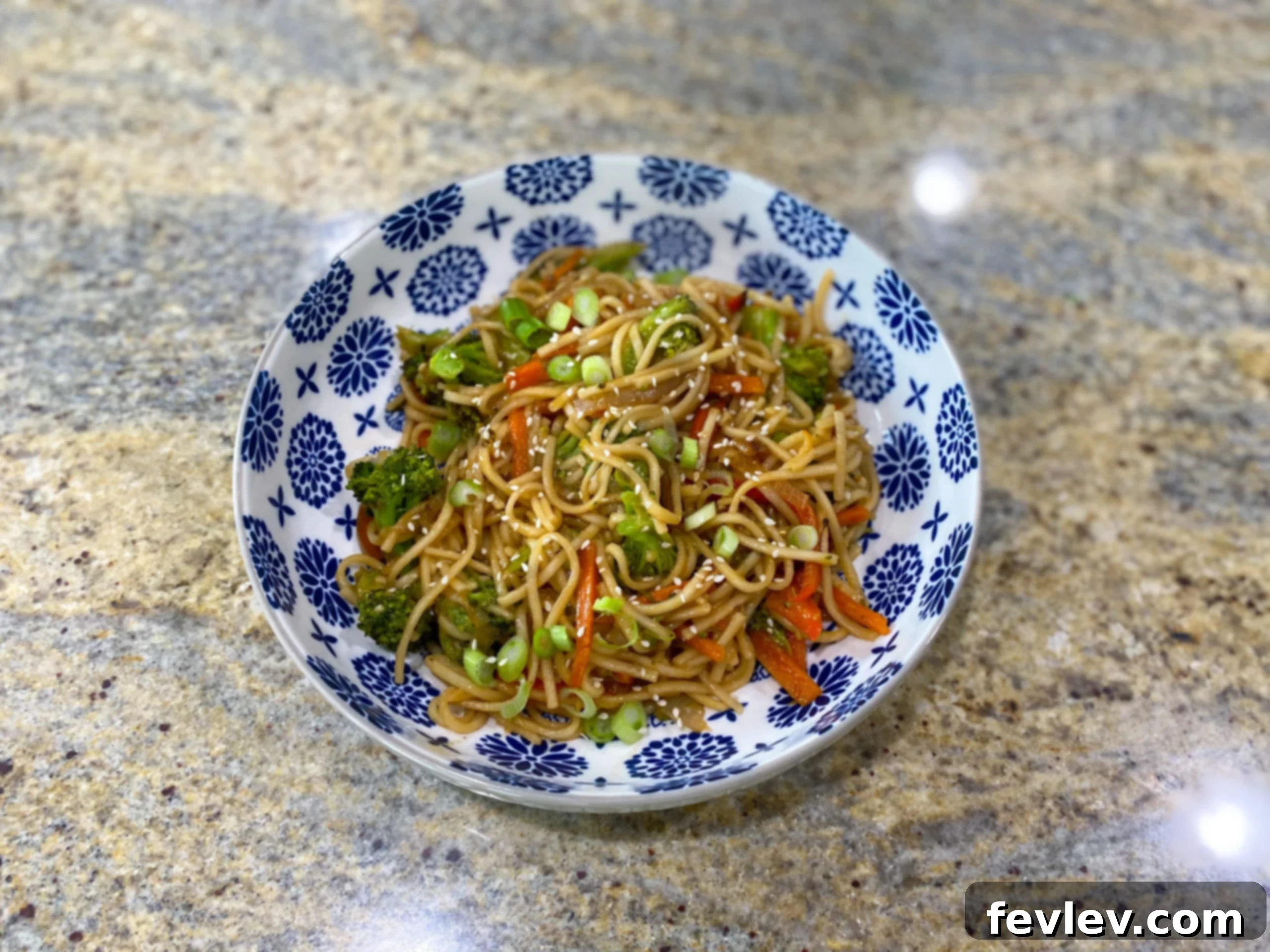
Delicious Vegetable Lo Mein: Your Go-To Quick & Healthy Weeknight Meal
Julia Pacheco
Transform your dinner routine with this incredibly simple yet satisfying Vegetable Lo Mein recipe. Featuring a vibrant medley of crisp, fresh vegetables and tender lo mein noodles coated in a rich, savory stir-fry sauce, this dish is a flavorful celebration of Asian cuisine. Perfect for busy weeknights, it comes together in just 30 minutes, offering a wholesome, meatless alternative to takeout that’s packed with nutrients and irresistible taste. Discover how easy it is to create restaurant-quality lo mein right in your own kitchen.
10 mins
20 mins
30 mins
4 servings
Comment
Print Recipe
Essential Ingredients for Your Vegetable Lo Mein
Creating an outstanding Vegetable Lo Mein begins with a selection of fresh, vibrant produce and a well-balanced sauce. This recipe is designed to highlight the natural flavors of the vegetables while delivering that classic, comforting lo mein taste. Here’s a breakdown of the key components you’ll need, along with insights into how each contributes to the final dish:
- 2 tbs olive oil: Serves as the base for sautéing, allowing the vegetables to develop their rich flavors. You can also use sesame oil for an added authentic Asian aroma.
- 3 large carrots, julienned: These provide natural sweetness and a beautiful orange hue, adding both flavor and visual appeal to your lo mein.
- 1 yellow onion, thinly sliced: An aromatic powerhouse, the onion softens and caramelizes slightly, building a foundational layer of savory flavor.
- 1 red bell pepper, thinly sliced: Adds a mild sweetness and a burst of vibrant red, enhancing the dish’s color and nutrient profile.
- 1 head broccoli, chopped: Offers a hearty texture and a touch of earthiness, packed with essential vitamins and fiber.
- 1 tbs minced garlic: The backbone of any good stir-fry, garlic delivers a pungent, aromatic punch that truly defines the dish.
- 8 oz lo mein noodles: The star! Look for fresh or dried egg noodles specifically labeled “lo mein” for the ideal chewy texture. If unavailable, thin spaghetti or even ramen noodles (discarding the seasoning packet) can be suitable substitutes.
For the Irresistible Lo Mein Sauce:
This simple yet potent sauce brings all the ingredients together, creating that signature savory-sweet balance that makes lo mein so addictive. Whisk these together just before adding to the pan.
- 2 tbs brown sugar: Provides a lovely sweetness that perfectly complements the salty soy sauce, creating a balanced flavor profile.
- 3 tbs low sodium soy sauce: The primary source of umami and saltiness. Using low sodium allows for better control over the dish’s overall salt content.
- ⅓ cup vegetable broth: Adds volume to the sauce, helping it to coat the noodles and vegetables evenly, and keeps the dish moist.
Step-by-Step Instructions: Crafting Your Perfect Lo Mein
Making delicious Vegetable Lo Mein at home is simpler than you might think. Follow these clear, concise steps, and you’ll have a vibrant, flavorful meal ready in no time. Remember, mise en place (having all your ingredients prepped before you start cooking) is key for a smooth stir-fry!
-
Sauté the Vegetables: Begin by heating the olive oil in a large, deep skillet or a wok over medium heat. Once the oil is shimmering and hot, add all your prepared vegetables: the julienned carrots, thinly sliced yellow onion, red bell pepper, and chopped broccoli. Stir these frequently to ensure even cooking. Continue to cook for 5-8 minutes, or until the vegetables have reached your desired level of tenderness. Some prefer them with a slight crispness, while others enjoy them softer. Adjust cooking time accordingly, being careful not to overcook them into mush.
-
Cook the Noodles: While your vegetables are busy cooking in the skillet, bring a large pot of salted water to a rolling boil. Add the lo mein noodles to the boiling water and cook them strictly according to the package instructions. Lo mein noodles typically cook quite quickly, often in just a few minutes. Once cooked to al dente, drain the noodles thoroughly in a colander and set them aside. Do not rinse them; the starch helps the sauce cling better.
-
Prepare the Lo Mein Sauce: In a small bowl, combine all the ingredients for the sauce: the brown sugar, low sodium soy sauce, and vegetable broth. Whisk them together vigorously until the brown sugar is completely dissolved and all the components are well integrated. Having the sauce ready to go is crucial for a swift stir-fry process.
-
Combine and Simmer: Once the vegetables in your skillet are tender, stir in the minced garlic. Cook for approximately 30 seconds until the garlic becomes wonderfully fragrant, being very careful not to let it burn. Immediately add the cooked, drained noodles and the whisked sauce to the skillet with the vegetables. Stir everything together meticulously, ensuring that every strand of noodle and every piece of vegetable is thoroughly coated in the savory sauce. Allow the mixture to simmer for an additional 4-5 minutes, giving the flavors time to meld and the sauce to slightly reduce and thicken. Serve your homemade Vegetable Lo Mein hot and savor every delicious bite!
The Unmatched Benefits of Homemade Vegetable Lo Mein
Opting for homemade Vegetable Lo Mein over takeout offers a multitude of advantages that go beyond just culinary satisfaction. When you prepare this dish in your kitchen, you gain complete authority over the ingredients. This means saying goodbye to the excessive oils, high sodium, and hidden sugars often prevalent in restaurant-prepared meals. You can select the freshest organic vegetables, choose your preferred type of noodles, and perfectly calibrate the sauce to match your dietary needs and taste preferences—whether you like it sweeter, saltier, or with a kick of spice. Moreover, the process of cooking itself is rewarding, filling your home with enticing aromas and providing a deeper connection to the food you consume. It’s not just a meal; it’s a healthier, more cost-effective, and fully customizable experience that store-bought options simply cannot replicate.
Mastering the Art of Lo Mein Sauce: Tips & Customizations
The sauce is the soul of any lo mein, and this recipe provides a perfectly balanced foundation. However, the beauty of cooking lies in customization! To elevate your sauce and truly make it your own, consider these enhancements. A teaspoon of toasted sesame oil, added at the very end of cooking, will infuse your dish with a rich, nutty depth that is quintessentially Asian. For a brighter, more complex flavor profile, a splash of rice vinegar can introduce a subtle tang that cuts through the richness. If you’re a fan of heat, a dash of sriracha, a pinch of red pepper flakes, or a few drops of chili oil can turn up the spice factor to your liking. Don’t shy away from fresh ginger—grated and added with the garlic—for an even more aromatic and warming base. Remember, taste and adjust as you go; the perfect lo mein sauce is a personal journey.
Navigating the Noodle Aisle: Choosing Your Lo Mein
The type of noodle you choose can significantly impact the texture and authenticity of your Vegetable Lo Mein. While the recipe calls for “lo mein noodles,” which are traditionally soft, chewy egg noodles, the culinary world offers several excellent alternatives. If you can find fresh egg noodles labeled specifically for lo mein or chow mein, they are ideal. Their thickness and chewiness are perfect for soaking up the savory sauce without becoming mushy. Should these be unavailable, dried egg noodles or even fresh ramen noodles (without their seasoning packets) can serve as fantastic stand-ins. In a pinch, regular spaghetti or linguine can also work; just ensure they are cooked al dente, as they will finish absorbing flavor and cooking in the wok. The key is to aim for a noodle that can hold its own against the robust sauce and crunchy vegetables.
Unleashing Your Creativity: Vegetable Medley Variations
One of the most appealing aspects of Vegetable Lo Mein is its remarkable adaptability. Our base recipe features a delightful mix of carrots, onion, bell pepper, and broccoli, creating a classic, colorful, and nutrient-rich foundation. However, the possibilities for vegetable additions are virtually endless, allowing you to tailor the dish to your preferences or what’s seasonal and available. Consider incorporating:
- Mushrooms: Sliced shiitake, cremini, or button mushrooms add a wonderful umami depth and a satisfying, earthy texture.
- Leafy Greens: Bok choy, Napa cabbage, or spinach wilt beautifully and contribute a delicate sweetness and tenderness.
- Pea Pods: Snap peas or snow peas offer a fantastic crisp-tender bite and vibrant green color.
- Crunchy Additions: Water chestnuts and bamboo shoots, often found canned in Asian markets, provide an authentic, refreshing crunch.
- Zucchini or Yellow Squash: Cut into thin matchsticks, these add moisture and a light texture.
- Bean Sprouts: For maximum crispness, stir these in during the very last minute of cooking.
Don’t be afraid to mix and match; the more variety, the richer and more appealing your lo mein will be!
Optional Protein Additions for a Heartier Meal
While this Vegetable Lo Mein stands strong as a delicious vegetarian main, it’s also incredibly versatile for those who wish to incorporate additional protein. For plant-based eaters, consider these excellent options:
- Tofu: Extra-firm tofu, pressed, cubed, and pan-fried or baked until golden and crispy, adds a satisfying chewiness and absorbs the sauce beautifully.
- Tempeh: Crumbled or cubed, tempeh brings a unique nutty flavor and a hearty texture.
- Edamame: Shelled edamame beans are a quick and easy way to boost protein and fiber content, adding a bright green color.
For those not adhering to a strictly vegetarian diet, cooked chicken (thinly sliced), shrimp, or lean cuts of beef or pork (also thinly sliced) can be stir-fried separately and then added back to the pan with the vegetables and noodles. Always ensure any raw meat or seafood is fully cooked before combining with the other ingredients to maintain food safety and optimal texture.
Unlock Flavor: Expert Tips for Stir-Frying Success
Achieving that perfect, restaurant-quality stir-fry at home is all about technique. A good stir-fry results in crisp-tender vegetables and noodles that are flavorful without being greasy or soggy. Here are some essential tips to help you master the art:
- Mise en Place is Paramount: Stir-frying is a rapid cooking method. Ensure all your vegetables are chopped, your sauce is mixed, and your noodles are cooked and drained *before* you even turn on the stove. This preparation makes the cooking process seamless and stress-free.
- Heat is Your Friend: Use a wok or a large, deep skillet, and get it screaming hot before adding oil. High heat is crucial for searing the vegetables quickly, locking in their flavor and maintaining their crispness. If the pan isn’t hot enough, vegetables tend to steam rather than fry.
- Avoid Overcrowding: Resist the urge to dump all the vegetables into the pan at once. Overcrowding lowers the pan’s temperature and releases too much moisture, leading to steamed, mushy vegetables instead of nicely seared ones. Cook in batches if necessary, removing earlier cooked vegetables and adding them back in at the end.
- Timing Matters: Add harder vegetables (like carrots and broccoli) first, as they require more cooking time. Softer vegetables (like bell peppers and onions) should follow. Garlic should always be added towards the end of the vegetable cooking process, just before the noodles and sauce, to prevent it from burning and becoming bitter.
Perfect Pairings: What to Serve with Your Lo Mein
While this Vegetable Lo Mein is a hearty and satisfying meal on its own, it also pairs beautifully with a variety of complementary dishes to create a more expansive and festive Asian-inspired spread. Consider enhancing your dining experience by serving it alongside:
- Crispy Egg Rolls or Spring Rolls: A classic appetizer that adds a delightful crunch and contrasts wonderfully with the soft noodles.
- Steamed Potstickers or Dumplings: These savory bites are always a crowd-pleaser and offer a different texture and flavor profile.
- A Simple Cucumber Salad with Sesame Dressing: A refreshing, light side that can cut through the richness of the lo mein.
- Additional Steamed Jasmine Rice: For those who love rice or want to stretch the meal further.
Make Ahead & Storage: Enjoying Leftover Lo Mein
One of the many conveniences of Vegetable Lo Mein is how well it stores and reheats, making it an excellent candidate for meal prepping. You can easily prepare a larger batch and enjoy the flavors throughout the week.
- Storage: Allow any leftover lo mein to cool completely before transferring it to an airtight container. Store it in the refrigerator, where it will remain fresh and delicious for up to 3-4 days.
- Reheating: To best reheat your lo mein, warm it gently in a skillet over medium heat. Add a small splash of water or vegetable broth to help rejuvenate the sauce and prevent the noodles from drying out. Stir frequently until heated through. Alternatively, you can microwave individual portions, stirring halfway through for even heating.
Keep in mind that the noodles may absorb more of the sauce during storage, so you might want to add an extra tablespoon of soy sauce or broth when reheating if you prefer a saucier dish.
Tailoring Your Lo Mein: Dietary Adjustments for Everyone
This Vegetable Lo Mein recipe is inherently versatile and can be easily adapted to suit various dietary needs and preferences without sacrificing flavor. Here’s how you can customize it:
- Gluten-Free: To make this dish entirely gluten-free, simply substitute regular soy sauce with tamari, which is a gluten-free alternative. Also, ensure your chosen lo mein noodles are certified gluten-free (rice noodles or specific gluten-free pasta brands work wonderfully).
- Lower Sodium: The recipe already specifies low-sodium soy sauce. If you’re particularly sensitive to salt, you can slightly reduce the amount of soy sauce used and taste as you go, adding more only if necessary.
- Spice Level: For those who enjoy a bit of heat, incorporating a pinch of red pepper flakes along with the garlic during the sautéing process will infuse the dish with a pleasant warmth. Alternatively, you can offer sriracha or chili oil at the table for individual customization.
Nutrition Information
Eating well doesn’t mean sacrificing taste. This Vegetable Lo Mein is a delicious and balanced meal. The following nutritional information is provided as an approximation per serving:
Carbohydrates: 68g |
Protein: 12g |
Fat: 9g |
Saturated Fat: 1g |
Polyunsaturated Fat: 1g |
Monounsaturated Fat: 5g |
Sodium: 774mg |
Potassium: 814mg |
Fiber: 8g |
Sugar: 14g |
Vitamin A: 10942IU |
Vitamin C: 180mg |
Calcium: 110mg |
Iron: 2mg
Please note: Nutrition information is automatically calculated and should be considered an approximation. Actual values may vary based on specific brands, ingredient substitutions, and preparation methods.
Tried this incredible recipe?
Let us know how your homemade Vegetable Lo Mein turned out! We’d love to hear from you.