
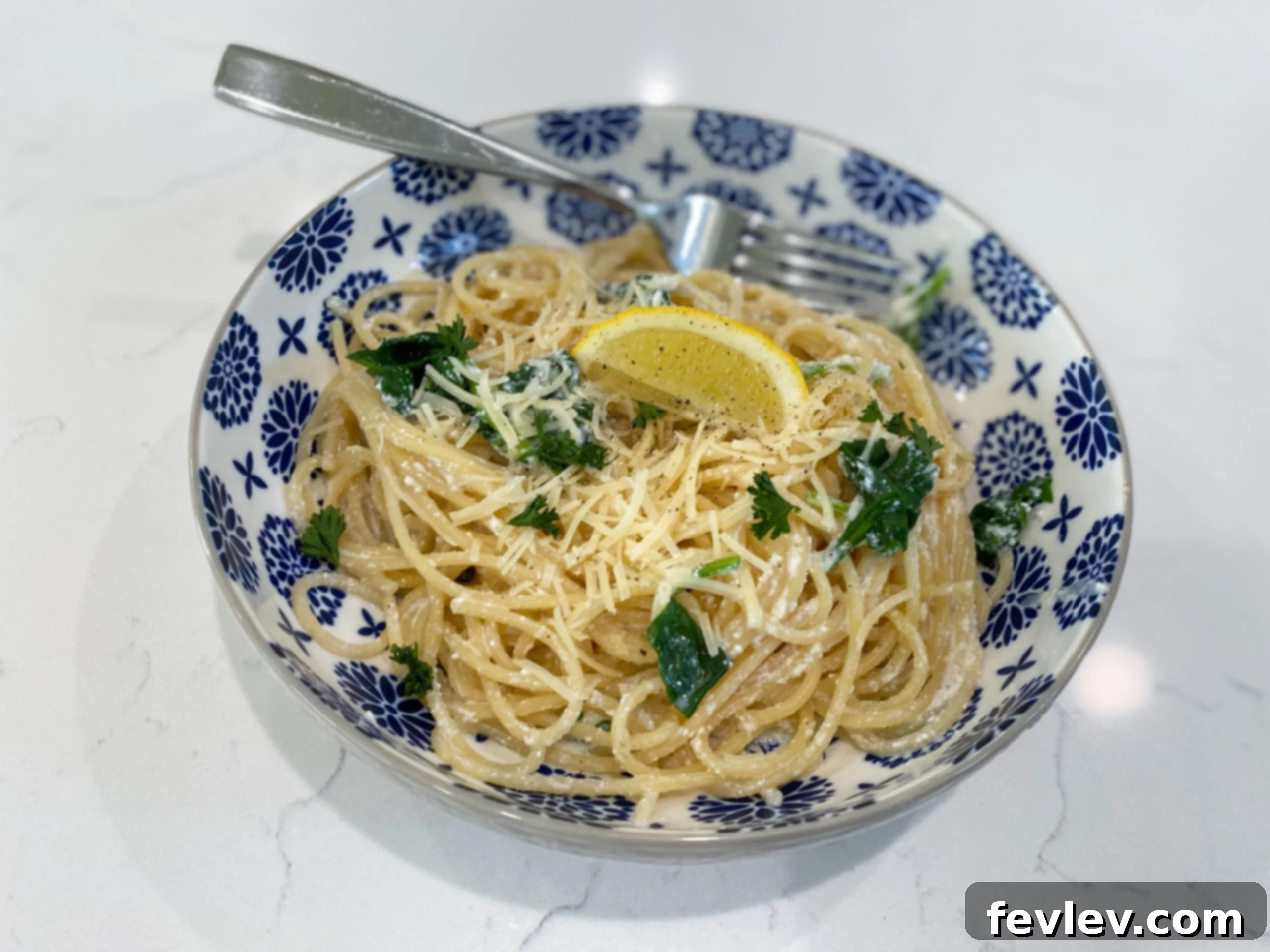

Creamy Lemon Spinach Pasta: A Quick & Zesty Weeknight Delight
Discover the perfect harmony of fresh, zesty lemon and tender spinach enveloped in a rich, creamy ricotta sauce. This irresistible Lemon Spinach Pasta dish, featuring al dente spaghetti, offers a bright and incredibly satisfying experience. It’s designed for busy weeknights, coming together in just 15 minutes, making it an ideal choice for a delicious and hassle-free meal.
Comment
Print Recipe
Why This Lemon Spinach Pasta Will Become Your Family’s Favorite
In the quest for delicious, healthy, and easy-to-make meals, this Creamy Lemon Spinach Pasta stands out as a true winner. It masterfully combines convenience with gourmet flavor, proving that you don’t need hours in the kitchen to create something truly special. This recipe is perfect for those busy evenings when time is of the essence but you still crave a homemade, comforting dish.
What makes this pasta so captivating? It’s the delightful interplay of textures and tastes. The smooth, velvety ricotta sauce clings beautifully to every strand of spaghetti, offering a luxurious mouthfeel. The bright, acidic notes from fresh lemon juice and zest cut through the richness of the cheese, providing an invigorating zing that elevates the entire dish. Fresh spinach, wilted into the pasta, adds a gentle earthiness and a boost of nutrients, making this a well-rounded and satisfying meal. It’s a vegetarian option that’s hearty enough for meat-eaters and light enough for a spring or summer evening.
Beyond its incredible taste, this recipe shines for its simplicity. With minimal prep and cook time, you can have a restaurant-quality meal on your table faster than ordering takeout. It’s an excellent canvas for customization, allowing you to easily add your favorite proteins or extra vegetables. Get ready to impress your taste buds and simplify your dinner routine with this fantastic Lemon Spinach Pasta!
Gather Your Ingredients: What You’ll Need
Preparing this exquisite Lemon Spinach Pasta begins with selecting fresh, quality ingredients. Here’s a detailed list of what you’ll need, along with tips for the best results:
- ½ lb Spaghetti: While spaghetti is traditional, feel free to use your favorite long pasta shape like linguine, fettuccine, or even a shorter pasta like penne or rigatoni. Ensure it’s good quality to absorb the sauce perfectly.
- 1 cup Ricotta Cheese: For the most indulgent and creamy sauce, opt for full-fat ricotta. Its smooth texture and mild flavor are foundational to this dish. If you’re looking for a slightly lighter version, part-skim ricotta can be used.
- ⅓ cup Shredded Parmesan Cheese: Freshly grated Parmesan cheese makes a significant difference compared to pre-shredded varieties. It melts more smoothly and offers a sharper, more complex salty-umami flavor.
- 1 tbsp Olive Oil: Extra virgin olive oil will add a fruity, slightly peppery note to the sauce. It helps to bring out the flavors of the garlic and lemon.
- 1 tbsp Minced Garlic: Fresh garlic is essential here. Mince it finely to ensure it disperses evenly throughout the sauce, contributing a wonderful aromatic depth without overpowering.
- 1 tsp Salt: Crucial for seasoning both the pasta water and the sauce. We recommend tasting as you go and adjusting to your preference.
- ½ tsp Pepper: Freshly ground black pepper adds a subtle warmth and balances the other flavors.
- 1 Lemon, Juiced: You’ll need the fresh juice, approximately 2-3 tablespoons. For an extra aromatic boost, consider zesting a portion of the lemon before juicing and adding the zest to the ricotta mixture.
- 5 cups Fresh Spinach: Baby spinach is highly recommended as it wilts down quickly and has a mild flavor. Don’t be concerned by the large volume; it reduces dramatically once cooked.
Essential Kitchen Tools
This recipe is wonderfully simple, requiring just a few common kitchen items:
- Large Pot: For boiling your pasta to perfection.
- Medium Mixing Bowl: To easily combine your creamy ricotta sauce ingredients.
- Whisk or Fork: For thoroughly blending the sauce components.
- Colander: An absolute necessity for draining the pasta and spinach.
- Lemon Juicer (optional): Makes extracting fresh lemon juice quick and effortless.
- Measuring Cups and Spoons: For accurate ingredient proportions.
Step-by-Step Instructions for the Perfect Lemon Spinach Pasta
Follow these straightforward steps to create a delightful and quick meal:
- Cook the Spaghetti: Begin by bringing a large pot of generously salted water to a rolling boil. Adding salt to the pasta water is vital, as it seasons the pasta from within. Once boiling, add your spaghetti and cook according to the package directions until it reaches an al dente texture – firm but with a slight bite. Stir occasionally to prevent the pasta from sticking.
- Prepare the Creamy Ricotta Sauce: While your pasta is cooking, turn your attention to the sauce. In a medium-sized mixing bowl, combine the fresh ricotta cheese, shredded Parmesan cheese, olive oil, minced garlic, salt, pepper, and the freshly squeezed lemon juice. Stir all these ingredients together vigorously with a whisk or a fork until the mixture is smooth, well combined, and beautifully creamy. This will form the luscious base of your pasta dish.
- Wilt Spinach and Reserve Pasta Water: As the pasta nears completion (approximately 1-2 minutes before it’s fully cooked), carefully scoop out about ½ cup of the starchy pasta water and set it aside. This reserved water is a crucial element for achieving the perfect sauce consistency later. Immediately after reserving the water, add the fresh spinach directly into the pot with the cooking pasta. Allow the spinach to wilt down for just 1-2 minutes; it will reduce significantly in volume. Once the spinach is wilted and the pasta is perfectly cooked, drain both thoroughly using a colander. Return the drained pasta and spinach to the large, empty pot.
- Combine and Serve: Now, add the prepared creamy ricotta mixture to the pot with the hot spaghetti and spinach. Pour in about ¼ cup of the reserved pasta water to start. Using tongs or a large spoon, stir everything together thoroughly, ensuring that every strand of pasta and every leaf of spinach is beautifully coated in the rich, lemon-infused sauce. If you find the sauce is too thick for your liking, gradually add more of the reserved pasta water, one tablespoon at a time, stirring after each addition, until you achieve your desired creamy consistency. Taste the pasta and adjust the seasoning with additional salt, pepper, or lemon juice if needed. Serve immediately and savor every bright, fresh bite!
Enhance Your Dish: Tips for Success & Flavorful Variations
Top Tips for a Perfect Pasta Experience:
- Don’t Forget the Salted Water: A well-seasoned pasta water is fundamental. It infuses flavor into the pasta itself, making a noticeable difference in the overall taste of your dish.
- Achieve Al Dente Perfection: Overcooked pasta can become mushy. Cooking it al dente ensures a pleasant texture that holds up beautifully to the creamy sauce.
- The Magic of Pasta Water: Never skip reserving some pasta water! Its starchiness helps to emulsify the sauce, creating a silky, cohesive coating that perfectly clings to your pasta without the need for excessive butter or cream.
- Freshness is Key: For the most vibrant flavors, always opt for freshly minced garlic and freshly squeezed lemon juice. The difference in aroma and taste is truly remarkable.
- Taste and Adjust: Culinary perfection often comes from tasting. Sample your sauce before mixing and again at the end, adjusting salt, pepper, or lemon as needed to suit your palate.
Creative Variations and Smart Substitutions:
- Boost the Protein: To transform this into a heartier meal, consider adding grilled chicken, pan-seared shrimp, or even some drained cannellini beans or chickpeas for a vegetarian protein boost.
- Add More Greens: While spinach is excellent, feel free to experiment with other greens like peppery arugula (stirred in at the very end), or finely chopped kale (add it with the pasta for slightly longer cooking).
- Herbaceous Notes: Fresh herbs like basil, parsley, or dill would wonderfully complement the lemon and spinach. Chop them finely and stir them in right before serving.
- A Touch of Heat: For those who enjoy a little kick, a pinch of red pepper flakes can be added to the ricotta mixture or gently sautéed with the olive oil before mixing.
- Different Cheese Choices: Explore other cheeses! Pecorino Romano offers a sharper, saltier profile than Parmesan, or for an even creamier result, a touch of mascarpone can be divine.
- Make it Gluten-Free: This recipe is easily adaptable for gluten-free diets. Simply use your preferred gluten-free spaghetti or pasta shape.
- Vegan Alternative: For a plant-based version, substitute ricotta with a homemade cashew cream or a store-bought vegan ricotta, and use nutritional yeast or a vegan Parmesan alternative.
Serving Suggestions & Storage Guidance
Perfect Presentation and Pairings:
This Lemon Spinach Pasta is a complete and satisfying meal on its own, vibrant enough to stand alone. Serve it hot, garnished with a final sprinkle of freshly grated Parmesan cheese, a twist of black pepper, and perhaps an extra lemon wedge for those who crave more citrusy brightness. For a beautifully balanced meal, consider pairing it with a simple side salad dressed with a light vinaigrette, or some warm, crusty garlic bread to soak up any leftover sauce.
Storage and Reheating Tips:
Should you have any delectable leftovers, store them in an airtight container in the refrigerator for up to 3-4 days. When it’s time to reheat, the sauce might appear thicker than fresh. To revive its creamy texture, gently warm the pasta on the stovetop over low heat or in the microwave, adding a splash of water, vegetable broth, or even milk. Stir frequently until it’s heated through and has returned to its luscious, desired consistency.
Frequently Asked Questions About Lemon Spinach Pasta
Q: Can I use frozen spinach instead of fresh?
A: Yes, frozen spinach can be used as a convenient alternative. Just be sure to thaw it completely and squeeze out as much excess water as possible. This crucial step prevents your delicious creamy sauce from becoming watery or diluted.
Q: Is this recipe suitable for vegetarians?
A: Absolutely! This Creamy Lemon Spinach Pasta is a naturally vegetarian dish, making it a fantastic and flavorful option for anyone seeking a meat-free meal.
Q: Can I prepare the sauce in advance?
A: Yes, you can definitely get a head start! The ricotta cheese mixture can be prepared up to 2 days in advance. Store it in an airtight container in the refrigerator, and then simply boil your pasta and combine everything as directed when you’re ready to cook.
Q: What if I don’t have ricotta cheese on hand?
A: While ricotta provides a unique texture and flavor, if you’re in a pinch, you could try blending cottage cheese until smooth for a similar consistency. Alternatively, cream cheese can offer a richer, tangier sauce. However, be aware that the overall flavor profile of the dish will change slightly with these substitutions.
Q: How can I make this dish spicier?
A: To add a pleasant kick, stir in a quarter to half a teaspoon of red pepper flakes along with the garlic in the ricotta mixture. You can adjust the amount to your preferred level of heat.
Q: Can I add other vegetables?
A: Definitely! This pasta is very versatile. Consider adding sautéed mushrooms, cherry tomatoes (halved), or steamed asparagus spears for extra flavor and nutrients. Add them with the spinach or sauté them separately and stir them in at the end.
Watch the Recipe Video
Watch Julia Pacheco demonstrate how easily this 15-minute Lemon Spinach Pasta comes together, along with other super-fast dinner ideas!
Nutrition Information (Approximate)
Per Serving (based on 4 servings):
- Calories: 402kcal
- Carbohydrates: 49g
- Protein: 19g
- Fat: 15g
- Saturated Fat: 7g
- Polyunsaturated Fat: 1g
- Monounsaturated Fat: 6g
- Cholesterol: 37mg
- Sodium: 801mg
- Potassium: 457mg
- Fiber: 4g
- Sugar: 3g
- Vitamin A: 3865IU
- Vitamin C: 25mg
- Calcium: 288mg
- Iron: 2mg
Please note: This nutrition information is automatically calculated and serves as an approximation. Actual values may vary depending on the specific brands of ingredients used and any modifications made to the recipe.